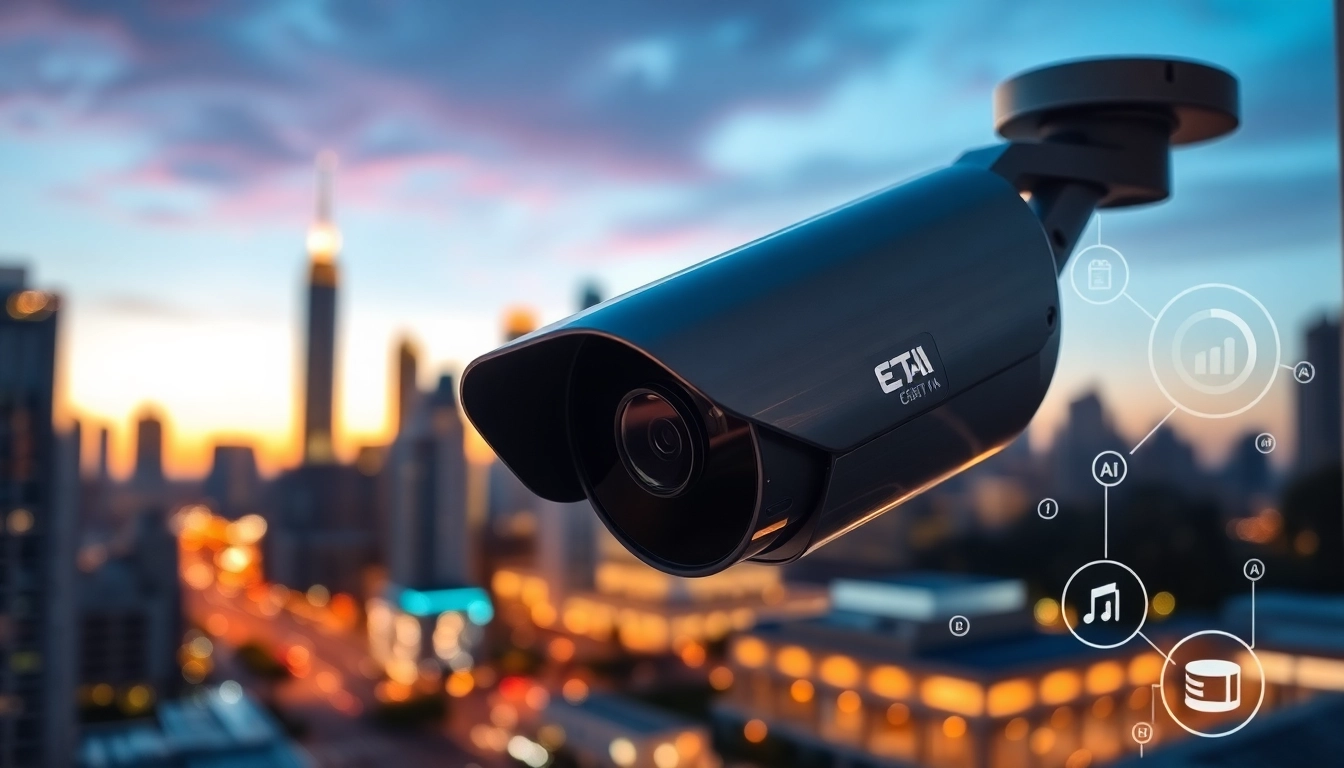
Introduction to AI CCTV Monitoring
In today's world, where security is paramount, the integration of technology into surveillance practices has drastically changed the landscape. AI CCTV monitoring leverages artificial intelligence to enhance security measures in both public and private sectors. This advanced approach provides not only enhanced surveillance capabilities but also efficient operational features that traditional systems cannot offer.
What is AI CCTV Monitoring?
AI CCTV monitoring is the application of artificial intelligence technologies to analyze video feeds from closed-circuit television (CCTV) cameras. Unlike traditional surveillance systems that require human monitoring, AI CCTV systems utilize machine learning algorithms to automatically detect anomalies, recognize faces, and assess behaviors in real time. This results in a more responsive and intelligent surveillance network that can operate around the clock with minimal human intervention.
Importance of AI in Surveillance
The necessity of AI in surveillance arises from a combination of increasing global security concerns and the demand for efficient monitoring solutions. With the rapid advancement of AI technologies, it's become possible to process vast amounts of footage quickly, identifying potential threats that may be missed in manual evaluations. AI enhances decision-making, allowing security personnel to focus their attention on critical situations rather than being bogged down by routine monitoring tasks.
How AI CCTV Monitoring Works
AI CCTV monitoring systems employ various machine learning techniques, including computer vision and deep learning, to analyze video data. The AI models are trained on extensive datasets, allowing them to recognize patterns and behaviors. During operation, these systems continuously review feeds, detecting incidents such as unauthorized access, unusual movements, or unattended objects. When an anomaly is identified, the system alerts relevant personnel, enabling a swift response.
Key Features of AI CCTV Monitoring
Real-time Anomaly Detection
One of the standout features of AI CCTV monitoring is its capability for real-time anomaly detection. By continuously analyzing footage, the system can identify unusual activities, distinguishing between normal and suspicious behaviors. For instance, AI can recognize when someone lingers in a restricted area and alert security accordingly. With these proactive measures, potential security threats can be addressed before they escalate.
Facial Recognition Technology
Facial recognition has gained traction as a critical element of AI CCTV monitoring. This technology identifies and verifies individuals by comparing facial features captured in video feeds against a pre-existing database. It is widely used for access control in secure premises and for identifying persons of interest in investigations. The accuracy of facial recognition continues to improve, enhancing the overall security environment.
Behavioral Analysis Capabilities
Beyond simple anomaly detection, AI CCTV monitoring systems employ behavioral analysis to observe patterns of activity over time. This feature enables the system to identify typical behaviors and subsequently monitor deviations that may indicate suspicious activity. For instance, an AI system can learn the usual foot traffic patterns in a retail setting and flag anomalies such as loitering or erratic movements.
Benefits of Implementing AI CCTV Monitoring
Increased Efficiency and Reduced Costs
Implementing AI CCTV monitoring leads to greater operational efficiency by reducing the need for constant human oversight. Security personnel can be alerted only to significant events, allowing them to allocate resources more effectively. This efficiency can translate to cost savings, as fewer staff members are required to monitor feeds continuously, and operational overhead can be minimized.
Enhanced Security and Response Times
The integration of AI in CCTV systems significantly enhances security by providing faster and more accurate responses to incidents. By automating monitoring processes and delivering real-time alerts, AI systems enable quicker interventions. This capability is crucial in situations where every second counts, such as preventing theft or responding to potential threats like unauthorized access.
Scalability for Various Applications
AI CCTV monitoring systems are highly scalable, making them suitable for numerous applications, from small businesses to large urban environments. Whether it's monitoring a single retail store or overseeing an expansive smart city, AI systems can adapt to various needs and integrate seamlessly with existing infrastructures. This flexibility allows organizations to implement sound security measures without overhauling their entire systems.
Challenges in AI CCTV Monitoring
Data Privacy Concerns
As AI CCTV monitoring systems collect and analyze vast amounts of video data, they inevitably raise concerns about data privacy. Organizations must ensure compliance with local and international regulations governing the collection, storage, and usage of surveillance data. Striking a balance between effective monitoring and respecting individual privacy rights is a challenge that needs addressing to maintain public trust.
Managing False Positives
False positives — when the system flags normal behavior as a threat — are a significant challenge in AI CCTV monitoring. High rates of false alarms can lead to unnecessary panic and inefficiencies in responding to alerts. Continuous learning and adaptation of AI models, alongside setting appropriate thresholds for alerts, are essential to minimize these occurrences and improve the reliability of the system.
Integration with Existing Systems
Integrating AI CCTV monitoring with pre-existing security systems can be complex. Many organizations have legacy systems that may not support modern AI capabilities. To ensure smooth transitions, it may be necessary to invest in compatible hardware or adopt cloud-based solutions that allow for easier integration. Planning for an incremental rollout can mitigate compatibility issues and minimize disruptions.
Future Trends in AI CCTV Monitoring
Advancements in AI Technologies
As AI technologies continue to evolve, we can expect significant advancements in the capabilities of CCTV monitoring systems. Improved algorithms will lead to higher accuracy in detecting anomalies, recognizing faces, and analyzing behaviors. Moreover, as computing power increases, systems will be able to process larger datasets more efficiently, further enhancing security outcomes.
Integration with IoT Devices
The Internet of Things (IoT) is set to play a crucial role in the future of AI CCTV monitoring. Integrating CCTV systems with IoT devices, such as smart locks or sensors, can create a more holistic approach to security. For example, if a sensor detects unusual activity, the CCTV system can initiate recording or alert security personnel automatically, forming a cohesive response strategy.
Potential for Smart City Applications
The application of AI CCTV monitoring in smart cities holds great potential for urban safety and management. City-wide surveillance networks can leverage AI to monitor traffic patterns, detect crime, and enhance emergency response systems. This data-driven approach allows city planners to make informed decisions, improve resources, and ultimately create safer urban environments.
FAQs
What is AI CCTV monitoring and how does it work?
AI CCTV monitoring uses artificial intelligence to analyze video feeds and detect incidents in real-time, enhancing security efficiency.
What are the key features of AI CCTV cameras?
Key features include real-time anomaly detection, facial recognition, and behavioral analysis to improve surveillance outcomes.
Can AI CCTV monitoring reduce security costs?
Yes, AI monitoring optimizes resource allocation and reduces the need for constant human monitoring, lowering overall security expenses.
What challenges does AI CCTV monitoring face?
Challenges include data privacy issues, managing false positives, and integrating with existing security systems effectively.
What is the future of AI CCTV monitoring technology?
The future includes advancements in AI technologies, broader integration with IoT devices, and applications in smart city initiatives.